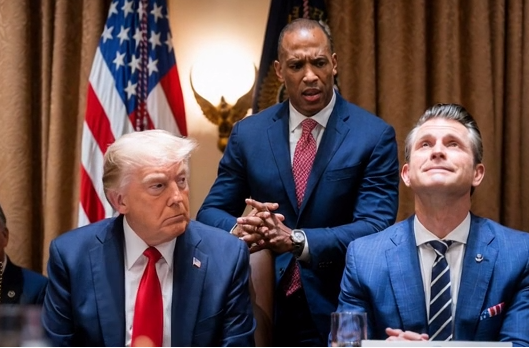
Defense Secretary Pete Hegseth has launched a forceful rebuttal against recent media reports, dismissing allegations regarding his use of the encrypted messaging app Signal for sensitive communications. Speaking at the White House during the annual Easter Egg Roll, Hegseth criticized journalists and “disgruntled former employees” for coverage he claims is designed to damage his reputation. He specifically rejected reports suggesting he shared sensitive military information concerning operations in Yemen within private group chats that included unauthorized individuals.
The controversy intensified following reports from The Atlantic and The New York Times regarding potential breaches of operational security. Jeffrey Goldberg, editor-in-chief of The Atlantic, was reportedly added accidentally to a group chat where senior officials discussed strikes against Iran-backed Houthi forces. Furthermore, allegations surfaced that Hegseth discussed military details with family members via the same platform. Despite these claims, Hegseth maintains that he remains focused on reforming the Department of Defense and strengthening military leadership, confirming he remains in full alignment with President Donald Trump.

The White House has moved quickly to contain the political fallout. Press Secretary Karoline Leavitt refuted NPR reports suggesting the administration was seeking a replacement for the defense secretary, labeling such claims as inaccurate and misleading. President Trump himself has praised Hegseth’s performance, characterizing the situation as overblown while noting that National Security Adviser Mike Waltz took responsibility for the initial Signal group chat error. Trump emphasized the success of the military missions, arguing that the mission achieved its objectives regardless of the messaging dispute.
This incident underscores the persistent tension between the administration and the media regarding information security and the use of anonymous sources. While some Democrats and lawmakers have called for his resignation, Hegseth’s position appears secure as the administration maintains a united front. The dispute highlights the ongoing challenges of balancing modern communication tools with strict security protocols within the Pentagon.
New Polling Highlights Shifting Views on Accountability and Presidential Power
A new wave of polling data is drawing attention to evolving public attitudes toward presidential accountability in the United States, particularly regarding Donald Trump. As political debate intensifies ahead of the 2026 midterm elections, recent surveys suggest a noticeable shift in how voters evaluate leadership, performance, and constitutional checks on executive authority.
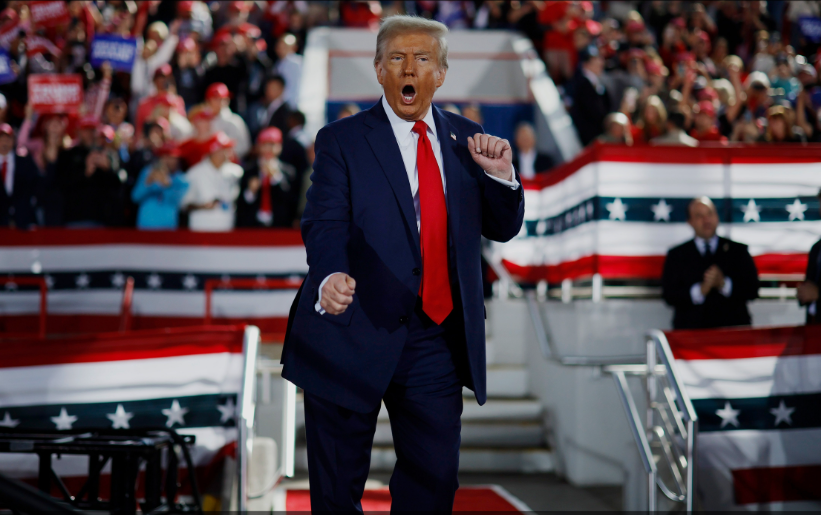
An April 2026 survey conducted by Lake Research Partners indicates that 52% of likely voters now support impeachment proceedings, with a significant portion expressing strong support.
The findings come just over a year into Trump’s second term and reflect growing scrutiny among certain segments of the electorate. While public opinion on such matters has historically fluctuated, the data points to increasing engagement with questions about accountability at the highest levels of government.
Earlier in the year, polling from CNN found that 58% of Americans viewed the president’s first year in office as unsuccessful. Respondents cited a range of concerns, including economic conditions, the use of executive authority, and the direction of foreign policy.
These issues have remained central to national discussions, shaping how voters interpret both policy decisions and leadership style.Despite these shifts, the country remains deeply divided along political lines. Approval ratings among Republicans remain high, with approximately 89% expressing support for Trump’s performance.
In contrast, about 84% of Democrats favor removal from office, underscoring a stark partisan divide that continues to define American politics. Independent voters, often seen as a key group in determining electoral outcomes, appear more varied in their views, reflecting a broader uncertainty about the current political landscape.(Image by Free Speech for People/Lake Research Partners)Constitutional experts emphasize that while public opinion plays a role in shaping political momentum, the process of removing a president is clearly defined and intentionally rigorous. Under the U.S. Constitution, impeachment begins in the House of Representatives and requires a majority vote. If articles of impeachment are approved, the process moves to the Senate, where a two-thirds majority is needed for conviction and removal from office. In a closely divided Congress, reaching that threshold presents a significant challenge.
Legal scholars note that this structure was designed to balance accountability with stability. The high bar for removal ensures that such actions are not taken lightly, while still providing a mechanism for addressing serious concerns. As debates continue, the distinction between political opinion and constitutional procedure remains an important part of the conversation.
The current polling trends also highlight broader questions about how Americans view executive power. Discussions about the scope of presidential authority, the role of oversight, and the importance of institutional checks have become increasingly prominent. These themes are likely to play a central role as candidates and voters prepare for the upcoming midterm elections.Political analysts suggest that the 2026 midterms could serve as a referendum on these issues. Voter turnout, campaign messaging, and shifting alliances will all influence how the electorate responds to the current climate.For some, the focus will be on policy outcomes and economic performance; for others, the emphasis may be on governance, transparency, and adherence to democratic norms.As the political landscape continues to evolve, the latest polling serves as a snapshot of a nation engaged in active debate about leadership and accountability. While opinions remain divided, the data underscores a shared interest in the functioning of democratic institutions and the balance of power within the federal government.
In the months ahead, these conversations are expected to intensify, shaping not only the midterm elections but also the broader direction of American political discourse.
2 MINUTES AGO! END IS NEAR? BIGGEST TRAGEDY JUST HAPPENED IN THE USA NM
2 MINUTES AGO! END IS NEAR? BIGGEST TRAGEDY JUST HAPPENED IN THE USA
The sky turned a bruised, unnatural shade of violet just moments before the sirens began their mournful wail, a sound that cut through the humid air like a jagged blade. Across the heartland, families who were merely finishing their dinner found their lives upended in a heartbeat as the horizon seemed to buckle under the weight of an unseen force. It wasn’t just the physical destruction that left the nation reeling, but the sudden, suffocating realization that we were standing on the edge of…
…a precipice we had long ignored. In the aftermath of the devastation, silence has become the most haunting sound of all. Survivors wander through the wreckage of their own lives, clutching photographs and remnants of a past that feels like it belongs to someone else. There is a collective, visceral reaction rippling through the country—a deep-seated intuition that this tragedy is not merely a statistical anomaly or a stroke of bad luck, but a profound, chilling signal that the foundations of our society are far more fragile than we dared to believe.