 Emirates Boeing 777 Crash-Lands and Bursts into Flames in Dubai; All 300 Evacuated, Firefighter Killed
DUBAI, United Arab Emirates — An Emirates wide-body passenger jet carrying 300 passengers and crew crash-landed and erupted into flames on the runway at Dubai International Airport on Wednesday afternoon. While a rapid cabin evacuation averted catastrophic loss of life inside the aircraft, aviation authorities confirmed that an airport firefighter died while battling the intense blaze.
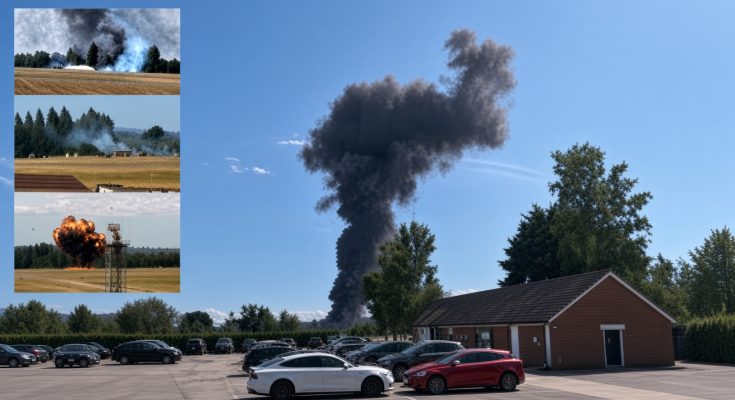
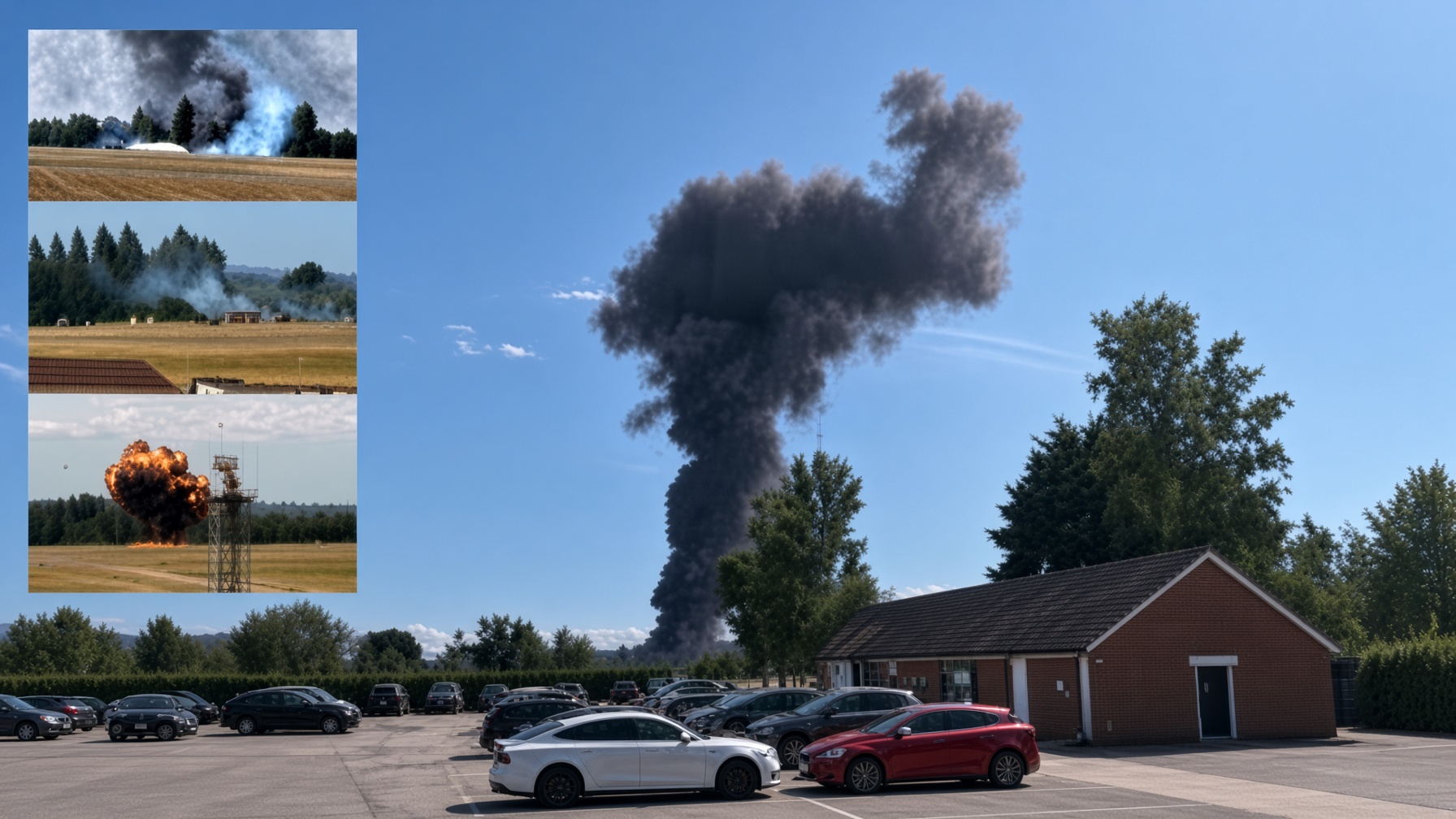
Emirates Flight EK521, a Boeing 777-300 inbound from Thiruvananthapuram, India, touched down heavily on the tarmac at approximately 12:45 p.m. local time. The twin-engine airframe skidded along the runway surface on its belly before coming to a violent stop, triggering a localized fuel fire that rapidly enveloped the right wing and mid-fuselage section, sending heavy black smoke over the airfield.
Addressing reporters at a press conference, Sheikh Ahmed bin Saeed Al Maktoum, chairman and chief executive of Emirates Airline and Group, confirmed the death of the emergency responder, hailing his sacrifice while containing the inferno. Al Maktoum added that 10 individuals were transported to regional hospitals with non-life-threatening injuries, primarily related to smoke inhalation and evacuation slide abrasions.
“Our primary operational focus remains centered on providing immediate medical attention and support services to our passengers and flight crew,” Al Maktoum stated. Airline officials confirmed that all 282 passengers and 18 operational crew members safely escaped the aircraft.
Split-Second Evacuation Prevents Disaster
Eyewitness footage and passenger testimonies detailed a chaotic yet disciplined evacuation executed moments before internal explosions consumed the passenger cabin. Cabin crews deployed emergency evacuation chutes as smoke filled the interior, directing passengers off the burning jet before flames burned through the upper fuselage roof.
Surviving passenger Iype Vallikadan reported that flight attendants alerted travelers to landing-gear anomalies during final approach, advising them to brace for a hard, abnormal touchdown. Upon impact, the cabin crew initiated emergency procedures, clearing the main deck in roughly 90 seconds despite passenger panic and escalating heat.
The flight manifest encompassed citizens from 20 different countries:
-
India: 226 passengers
-
United Kingdom: 24 passengers
-
United Arab Emirates: 11 passengers
-
United States and Saudi Arabia: 6 passengers each
-
Turkey: 5 passengers
-
Ireland: 4 passengers
-
Additional Nationalities: Australia, Brazil, Germany, Malaysia, Thailand, Croatia, Egypt, Bosnia and Herzegovina, Lebanon, the Philippines, South Africa, Switzerland, and Tunisia.
Technical Probe Focuses on Landing Phase
The exact mechanical and operational sequence leading to the hull loss remains under official review. Airline leadership noted that automated aerodrome weather sensors warned of low-level wind shear—a violent microburst or sudden shift in horizontal and vertical airspeed—over the threshold around the time of the approach, though investigators caution that it is too early to assign causality.
The UAE General Civil Aviation Authority (GCAA) has commenced an official safety investigation in coordination with Emirates, airport operations, and international bodies. U.S. aerospace manufacturer Boeing stated that a specialized technical team has been assembled to assist investigators under the auspices of the U.S. National Transportation Safety Board (NTSB).
The accident shuttered Dubai International Airport—the world’s busiest international aviation gateway, which served 78 million passengers last year—for several hours. Flights bound for the emirate were diverted to nearby hubs, including Al Maktoum International Airport and Sharjah, while outbound traffic experienced multi-hour ground stops before partial departures resumed around 7:00 p.m.
The crash represents the most significant operational hull loss in Emirates’ four-decade history, an operation historically recognized for maintaining one of the commercial airline industry’s most rigorous fleet safety records.