 Emirates Jet Crash-Lands at Dubai Airport with 300 Aboard; Firefighter Killed in Response
DUBAI, United Arab Emirates — An Emirates passenger jet carrying 300 people crash-landed and caught fire on the runway at Dubai International Airport on Wednesday. While all passengers and crew evacuated safely, officials confirmed that one firefighter died while battling the blaze.
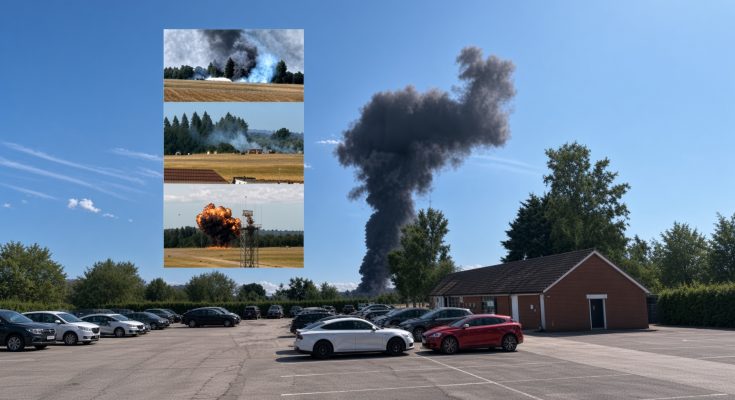
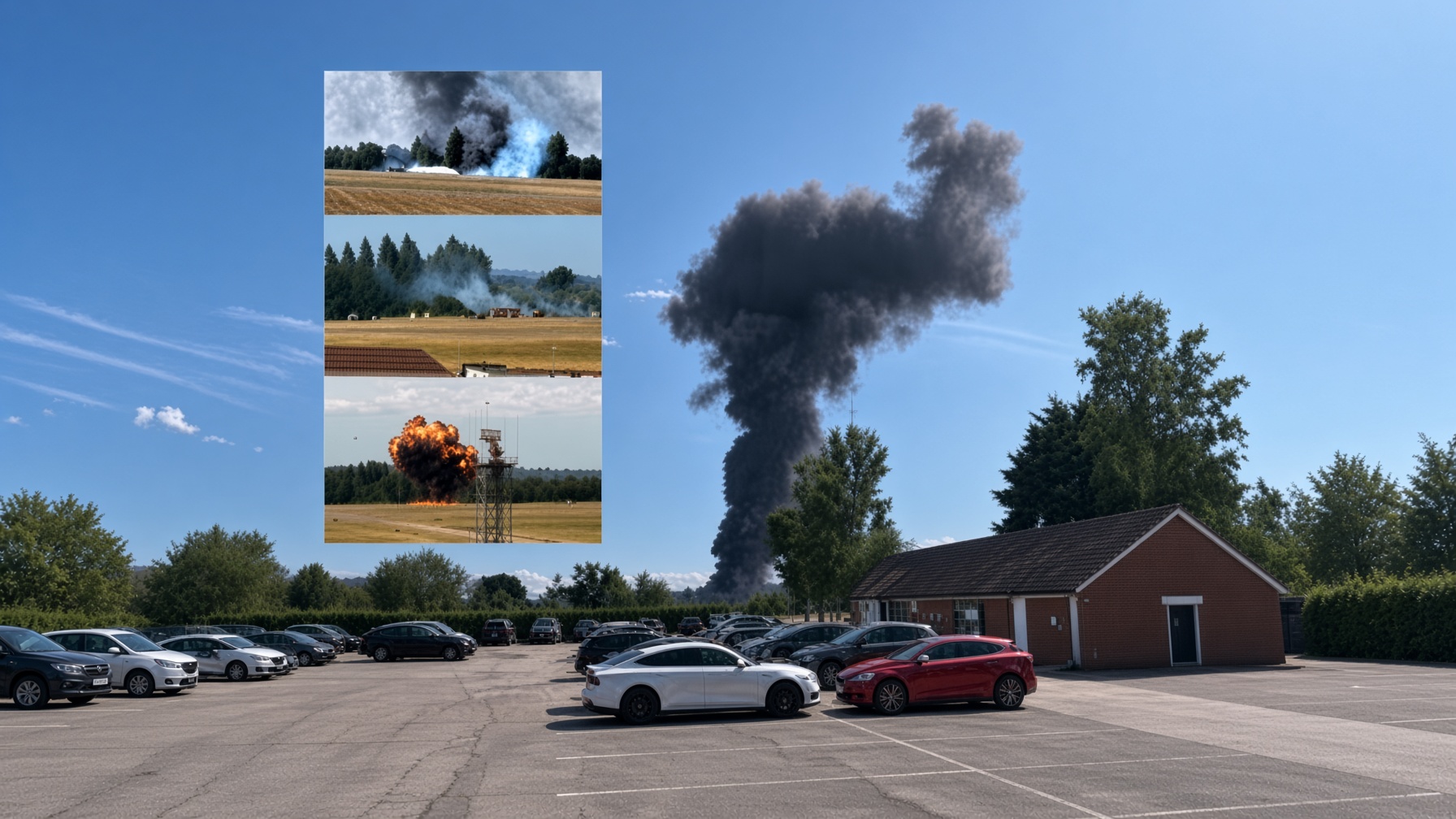
Emirates Flight EK521, a Boeing 777 arriving from Thiruvananthapuram in southern India, came down hard at approximately 12:45 p.m. local time. The aircraft skidded across the tarmac and burst into flames, sending thick plumes of black smoke billowing into the sky.
Ahmed bin Saeed Al Maktoum, chairman and CEO of Emirates Airline, announced the firefighter’s death during a press briefing, praising emergency personnel for their rapid and decisive action. He also confirmed that 10 people were taken to local hospitals with minor injuries.
“Our first priority remains the care and well-being of our passengers and our crew,” Al Maktoum said. All 282 passengers and 18 crew members were accounted for.
Rapid Evacuation Averts Catastrophe
Witness accounts and images from the scene showed passengers escaping down emergency inflatable slides just moments before explosions gutted the fuselage.
Passenger Iype Vallikadan told the Associated Press that the flight crew warned travelers of landing-gear trouble as the plane descended toward Dubai, alerting them that an emergency landing would be required. Once the aircraft touched down and ground to a halt, flight attendants moved swiftly to open the exits, orchestrating a complete evacuation within minutes under smoke-filled conditions.
The passenger manifest reflected a diverse international manifest:
-
India: 226 passengers
-
United Kingdom: 24 passengers
-
United Arab Emirates: 11 passengers
-
United States & Saudi Arabia: 6 passengers each
-
Turkey: 5 passengers
-
Ireland: 4 passengers
-
Other nations: Australia, Brazil, Germany, Malaysia, Thailand, Croatia, Egypt, Bosnia and Herzegovina, Lebanon, the Philippines, South Africa, Switzerland, and Tunisia.
Safety Record and Investigations Underway
The precise cause of the accident remains undetermined. Al Maktoum noted that regional weather reports indicated wind shear—a sudden, severe downdraft of wind—at the time of the descent, though investigators have not confirmed whether atmospheric conditions factored into the crash.
The United Arab Emirates’ General Civil Aviation Authority (GCAA) has launched a formal investigation alongside Emirates and airport authorities. Saif Mohamed Al Suwaidi, director general of the GCAA, stated that safety teams were mobilized immediately. U.S. planemaker Boeing confirmed that a technical group is prepared to assist the investigation in coordination with the National Transportation Safety Board (NTSB).
The incident temporarily paralyzed Dubai International Airport, the region’s busiest hub, which handled 78 million travelers last year. Inbound and outbound flights faced ground stops and delays averaging six hours before operations gradually resumed shortly before 7 p.m. local time.
Founded in 1985, Emirates has long held a reputation as one of the world’s safest long-haul carriers, making Wednesday’s runway emergency one of the most severe operational incidents in the airline’s history.