WASHINGTON — President Donald Trump signaled that the United States and Iran could finalize an agreement within the next week to extend an interim ceasefire and reopen the Strait of Hormuz, projecting confidence about the diplomatic track despite fresh regional friction and conflicting signals from Tehran.
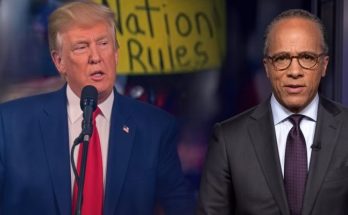
In a telephone interview with ABC News chief Washington correspondent Jonathan Karl,
Trump described the backchannel negotiations as “looking good,” even as he acknowledged that discussions had hit a temporary snag earlier in the day. “There was a little glitch today, but I turned that one around very quickly,” Trump said. According to the president, diplomatic momentum faltered after Tehran bristled at expanded Israeli military strikes in
Lebanon. Trump claimed he intervened directly with both parties, pressing for an immediate de-escalation to preserve the delicate U. S. -Iranian dialogue. Framing the high-stakes diplomacy as a potential turning point in modern Middle Eastern statecraft, Trump argued that a binding diplomatic accord would yield a more durable outcome than sustained kinetic action. “A peace
agreement with Iran could be even better than a military victory,” he said. Navigating Decades of Strategic Mistrust Trump acknowledged the formidable structural headwinds facing any comprehensive deal, citing decades of institutional acrimony between Washington and Tehran. Describing Iran as an influential regional power, he noted that domestic political considerations on both sides continue to
complicate the talks.
“It’s not an easy thing for them,” Trump said. “It’s actually not
easy from our standpoint either. But we’re getting what we need to get.”
The president indicated that negotiators are working toward a formal memorandum of understanding focused on lifting maritime restrictions in the Persian Gulf and guaranteeing safe passage through the Strait of Hormuz. While suggesting the document could be completed within seven days, Trump conceded that key sticking points remain on the table. “I still have to
get a few more points,” he added, without detailing the outstanding concessions. The optimistic timeline emerged after hours of diplomatic turbulence on Monday, when Iranian officials signaled a suspension of talks in protest of ongoing Israeli operations against Hezbollah targets in Lebanon. That declaration fueled concerns among allied capitals that the diplomatic opening was on