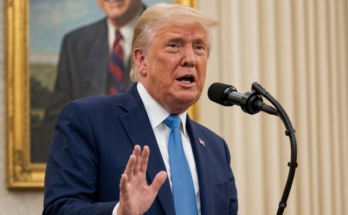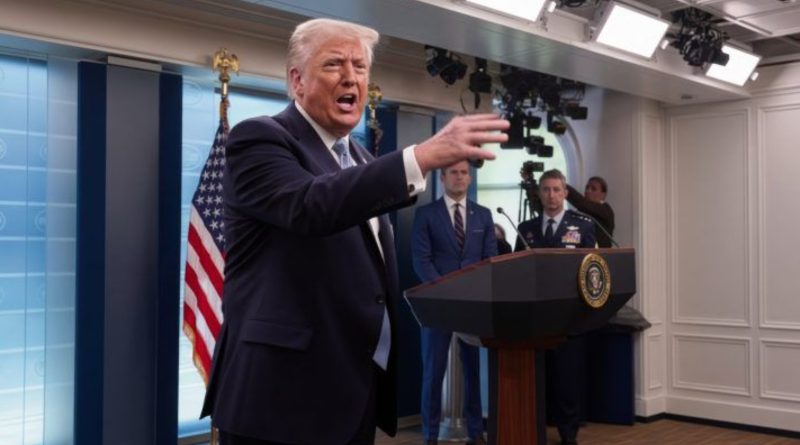
A fragile ceasefire between the United States and Iran came under renewed pressure on June 27 after American forces carried out additional strikes against Iranian military infrastructure following another attack on a commercial vessel near the Strait of Hormuz. President Donald Trump responded with a stark warning to Tehran, threatening further military action if attacks on international shipping continued. The confrontation raised fresh concerns about the survival of a recently negotiated agreement intended to suspend hostilities and create space for broader diplomatic negotiations. In a statement posted on Truth Social, Trump said Washington might eventually be forced to “militarily complete the job” it had begun. He added that, if further escalation became necessary, “the Islamic Republic of Iran will no longer exist.” The remarks underscored the administration’s determination to protect maritime traffic through one of the world’s most strategically important shipping corridors. They also highlighted the growing risk that renewed military exchanges could undermine efforts to prevent a wider regional conflict.
According to U.S. Central Command (CENTCOM), American forces conducted additional strikes against multiple targets in Iran on June 27 after an attack drone struck the Panama-flagged oil tanker M/T Kiku near the Strait of Hormuz. CENTCOM said the drone hit the vessel at approximately 4:30 a.m. Eastern Time as it transited the area carrying more than two million barrels of crude oil. The military described the operation as a direct response to what it characterized as continued Iranian attacks against commercial shipping. The announcement followed earlier American strikes on June 26, which Washington said were retaliation for an attack on the Singapore-flagged vessel M/V Ever Lovely. U.S. military aircraft targeted Iranian military surveillance infrastructure, communications systems, air-defense sites, drone storage facilities, and capabilities associated with laying naval mines, according to CENTCOM’s public statement. The targets reflected Washington’s stated objective of reducing Iran’s ability to threaten merchant vessels operating near its southern coastline.
However, the military announcements primarily outlined the American account of the events. Independent verification of every operational detail and the full extent of the damage was not immediately available. CENTCOM said commercial vessels continued to transit the Strait of Hormuz and that American forces remained prepared to protect shipping in the region.
Diplomatic Agreement Under Strain
The latest strikes threatened a diplomatic arrangement reached on June 17, when Washington and Tehran agreed to a framework intended to halt hostilities and establish a period for negotiations. The agreement was designed to provide an initial pause in fighting while officials worked toward a more durable security arrangement. Maritime access through the Strait of Hormuz was a central issue, given the waterway’s importance to international energy supplies and commercial trade. The renewed attacks exposed a significant weakness in the arrangement: maintaining a ceasefire requires both sides to avoid actions that could trigger retaliation, even while major disagreements remain unresolved.
Washington argued that attacks on commercial vessels violated the spirit of the agreement and required a response. Tehran, meanwhile, has repeatedly challenged the American military presence in the region and disputed Washington’s approach to regional security. Responsibility for individual incidents remains an important issue. U.S. officials attributed the attacks on the two vessels to Iran, while the available reporting did not establish a comprehensive, independently verified account of every aspect of the incidents. The competing positions have made it increasingly difficult to determine whether the ceasefire can withstand further confrontations.
Global Energy Market at Risk
The crisis carries consequences far beyond the immediate military standoff. The Strait of Hormuz is a critical passage for international oil shipments and liquefied natural gas, connecting major Gulf energy producers with global markets. Any sustained interruption to shipping can increase transportation costs, raise insurance premiums, delay deliveries, and create uncertainty for energy buyers. Market concerns can also influence crude oil prices and, eventually, costs for fuel, transportation, manufacturing, and other goods. The extent of those effects depends on how long disruptions persist, the volume of shipping affected, and whether alternative supply routes can compensate.
For governments and businesses, the central concern is not only the immediate damage caused by an individual attack but also the possibility that commercial operators may begin avoiding the area because of security risks. The United States has presented maritime protection as a key objective of its regional policy. Yet additional strikes also carry risks, including possible Iranian retaliation against American forces, regional partners, or commercial interests.
Difficult Path Forward
The renewed confrontation places pressure on officials seeking to preserve the diplomatic process. A ceasefire can provide an opportunity for negotiations, but repeated military exchanges can erode confidence and make further compromise more difficult. Washington faces the challenge of deterring attacks on commercial shipping without allowing retaliatory operations to develop into an open-ended campaign. Tehran faces its own calculations over how to respond to American military pressure while avoiding further damage to its military infrastructure and regional position.
For countries dependent on Gulf energy exports, the immediate priority is the safe and predictable movement of commercial vessels. Regional governments and international shipping operators are also watching for signs that the confrontation could spread beyond the immediate maritime corridor. The coming days will be critical in determining whether diplomatic contacts can continue despite the renewed violence. For now, the ceasefire remains under serious strain. The U.S. strikes, the reported attack on the M/T Kiku, and Trump’s warning illustrate how quickly a limited maritime confrontation can threaten a broader diplomatic framework. Whether the agreement survives will depend on subsequent military decisions, the handling of further incidents, and the willingness of both governments to keep negotiations open rather than allowing retaliation to dictate the next stage of the conflict.