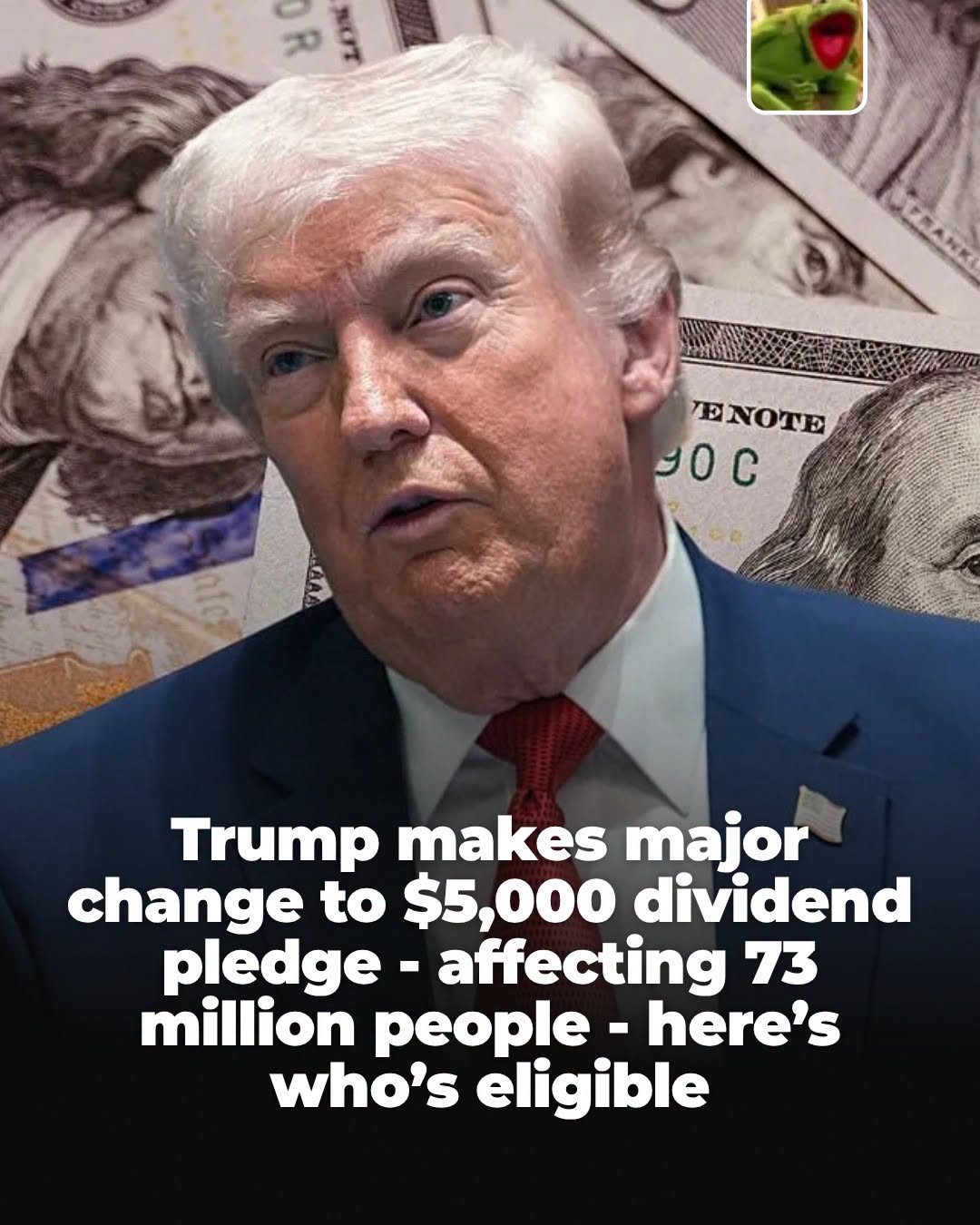

President Donald Trump’s proposal to send $5,000 payments to Americans has sparked widespread debate, with millions wondering whether they would qualify for the money and when the checks might arrive.
The president has repeatedly promoted the idea of a $5,000 “Trump Dividend,” linking the proposed payments to Republican success in the November 2026 midterm elections.
But an important detail has raised questions about eligibility: the proposal is intended for adult American citizens, not every person living in the United States.
And despite the attention surrounding the announcement, no nationwide $5,000 payment program has been approved.
Trump Promises $5,000 to American Adults
On September 9, 2026, Trump announced the proposal during a Republican convention in Dallas.
Trump described the payments as a dividend that Americans could receive because of what he characterized as the country’s economic success.
The proposal immediately attracted national attention.
For households struggling with groceries, housing, transportation and other everyday expenses, an additional $5,000 could represent substantial financial assistance.
A married couple in which both spouses qualified could potentially receive $10,000 under the proposal.
However, the payments remain conditional on several factors, including the election results and the government’s ability to establish and fund such a program. FactCheck.org
Who Would Qualify for the Money?
One of the biggest questions surrounding the announcement concerns who would actually receive the proposed payments.
Trump’s stated eligibility requirement is that recipients must be adult American citizens.
That means children under 18 would not qualify under the announced proposal.
The distinction matters for families who might otherwise assume every household member would receive a separate payment.
For example, a household consisting of two parents and two young children would potentially qualify for $10,000 rather than $20,000, assuming both parents met the final eligibility requirements.
However, no detailed eligibility rules have been approved.
Questions remain about whether income restrictions, tax-filing requirements or other conditions might eventually apply.
Although some headlines have suggested Trump recently changed his position, his September 9 speech already referred specifically to adult citizens. The White House reiterated that wording the following day. The White House
The Enormous Cost of the Proposal
Distributing $5,000 to millions of Americans would require an extraordinary amount of federal spending.
Estimates suggest the total cost could exceed $1.2 trillion.
That figure raises significant questions about how the federal government would finance the payments.
Trump has suggested that revenue generated through tariffs could help fund the proposal.
However, independent analysts have questioned whether tariff revenue would be sufficient.
FactCheck.org estimated that, at the relevant revenue levels, tariffs would take more than six years to generate enough money to cover the proposed payments.
Economists have also warned that financing such a large program through additional federal borrowing could increase the national deficit and potentially contribute to inflation.
The administration has maintained that the payments are financially achievable, but a detailed funding mechanism has not been established. FactCheck.org
Many Americans Doubt the Checks Will Arrive
Despite the appeal of receiving $5,000, public opinion remains divided.
An Economist/YouGov survey conducted in September found that 61% of likely voters believed Trump would not deliver the payments.
By comparison, approximately 22% believed he would follow through.
The same polling showed that 45% of likely voters opposed the proposed checks, while 43% supported them.
Those findings suggest that Americans are divided not only over whether the payments will happen, but also over whether the program itself is a good idea. Axios
Previous Payment Proposals Raise Questions
This is not the first time Trump has discussed sending direct payments to Americans.
Earlier proposals included a potential $5,000 dividend associated with savings from the Department of Government Efficiency and a separate $2,000 dividend connected to tariff revenue.
Neither proposal resulted in the broadly distributed payments originally discussed.
The latest $5,000 announcement has therefore renewed questions about whether the administration can turn a public promise into an approved federal program.
Unlike an ordinary government benefit that has already been authorized, the Trump Dividend still faces significant legislative and financial obstacles.
When Could Americans Receive the $5,000?
At present, there is no confirmed payment date.
Trump has connected the proposed checks to the outcome of the November 3, 2026, midterm elections.
Even if Republicans retain control of Congress, the payments would not automatically begin.
Congress would still need to address the legal and financial requirements associated with distributing such a substantial amount of federal money.
House Speaker Mike Johnson has acknowledged that the proposal would require congressional approval and additional planning.
That means Americans should not expect a payment simply because the election has taken place. Reuters
What Americans Should Know Right Now
The $5,000 Trump Dividend remains one of the most widely discussed financial proposals ahead of the midterm elections.
For many families, the prospect of receiving thousands of dollars is understandably significant.
But the difference between a political promise and an approved government payment is crucial.
As of October 13, 2026, the proposed $5,000 payments have not been authorized, no distribution schedule has been announced, and Americans cannot apply to receive them.
The central questions remain unanswered: whether Congress will approve the program, how it would be funded and what the final eligibility requirements would look like.
Until those details are resolved, the proposed checks remain a possibility rather than guaranteed financial assistance.