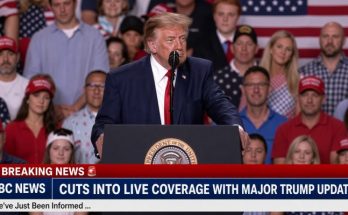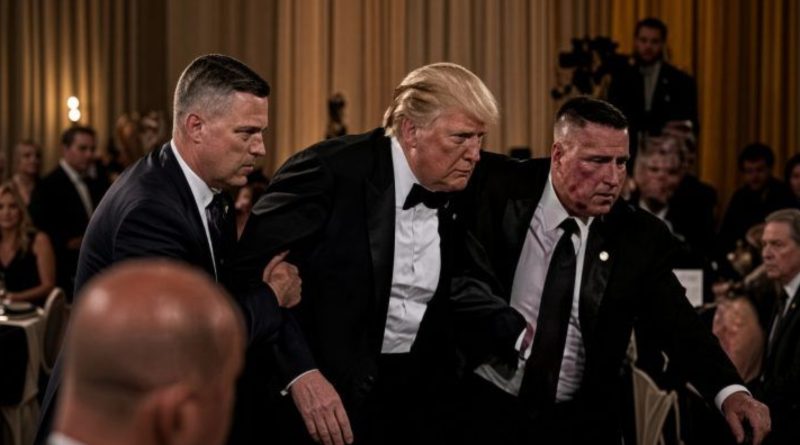
WASHINGTON – A sudden surge of unverified social-media posts alleging that President Donald Trump was “shot again” in the nation’s capital ricocheted across digital platforms over the weekend, triggering widespread public alarm before being debunked by law-enforcement records and official reporting.
The claims, which gained rapid traction across X, Telegram, and TikTok, paired sensational headlines with recycled archival footage to suggest an active assassination attempt had unfolded in Washington, D.C. However, federal authorities and accredited news organizations confirmed that no such attack took place, and the president was neither harmed nor targeted in gunfire.
The viral firestorm appears to have stemmed from the distortion of a real, but fundamentally different, security episode near the Executive Mansion on Saturday, September 19.
Security Incident Details
According to law-enforcement officials, an individual drove an unauthorized vehicle onto a pedestrian sidewalk near the intersection of 16th and H Streets Northwest, directly north of Lafayette Square. Upon being intercepted by the U.S. Secret Service Uniformed Division, the driver reportedly made agitated statements and demanded an audience with Trump.
Trump was not on the White House grounds during the incident; the president had departed earlier for Camp David, the presidential retreat in rural Maryland.
Secret Service agents, flanked by the Metropolitan Police Department, established an immediate perimeter, swept the vehicle with explosive-detection units, and found no weapons or hazardous materials. The driver was detained without incident and transported to a regional medical facility for an involuntary psychiatric evaluation. No shots were fired, and no injuries were reported.
Misinformation Spread
Within hours, bad actors and high-engagement aggregation accounts conflated the minor security breach with fabricated reports of an assassination attempt. The episode illustrates a recurring pattern in digital misinformation: an authentic physical incident serves as the anchor, while dramatic language and out-of-context imagery are layered on top to manufacture a non-existent catastrophe.
A genuine armed assault against a sitting American head of state triggers immediate, institutional protocols. It initiates emergency lockdown procedures across the capital, mobilizes trauma units at Walter Reed National Military Medical Center, prompts televised briefings from the White House press corps, and results in on-the-record statements from congressional leadership. None of those actions occurred over the weekend.
The rumors also drew scrutiny due to lingering sensitivities surrounding the documented July 13, 2024, assassination attempt against Trump at an open-air campaign rally in Butler, Pennsylvania.
2024 Assassination Attempt Context
During that attack, a 20-year-old gunman, Thomas Matthew Crooks, opened fire from an unsecured rooftop, clipping Trump’s right ear, killing attendee Corey Comperatore, and critically wounding two others before being neutralized by a Secret Service counter-sniper. That shooting remains the subject of ongoing federal oversight and congressional inquiries. As recently as September 2026, Attorney General Todd Blanche noted that the Department of Justice and the Federal Bureau of Investigation continue to review evidentiary leads tied to the Butler investigation.
Yet intelligence analysts warn that the reality of the 2024 shooting has made digital audiences particularly vulnerable to false alarms. Because an attack has happened before, users are far more inclined to accept sensationalized claims as plausible without waiting for corroboration.
National security experts emphasize that unchecked rumors concerning the safety of political leaders carry concrete risks. They divert critical resources, flood emergency dispatch lines, disrupt financial markets, and inflame an already polarized electorate.
As algorithmic distribution continues to outpace traditional journalistic verification, news consumers face a crowded ecosystem where sensationalism routinely masquerades as breaking developments. In the case of Saturday’s perimeter breach near the White House, the verified facts remain clear: a localized trespass occurred on a D.C. sidewalk, the suspect was neutralized without force, and the president was miles away, entirely unharmed.