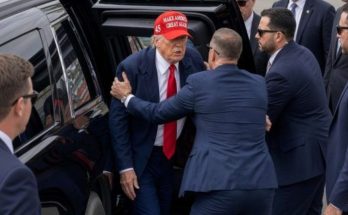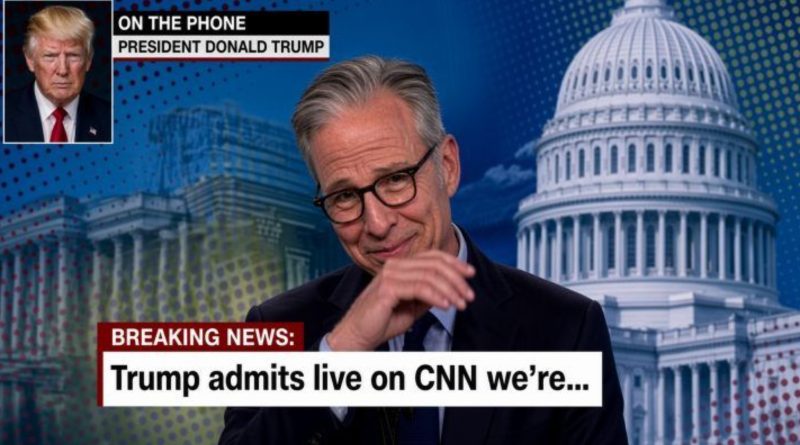
In an unexpected televised moment that sent tremors through both the media industry and Capitol Hill, President Donald Trump breached a years-long personal boycott of CNN on July 12, 2026, using the close of a brief telephone interview to declare his intent to steer the global news organization back onto what he characterized as a “normal path.”
The unprompted remark arrived at the tail end of CNN’s flagship Sunday public affairs broadcast, State of the Union. Trump had dialed into the program unannounced to deliver an on-air eulogy following the sudden death of South Carolina Sen. Lindsey Graham, one of the administration’s most influential congressional allies and a central architect of conservative foreign policy. Anchor Jake Tapper anchored the segment on Graham’s legislative legacy and decades-long footprint in Washington. When Tapper attempted to widen the scope of the dialogue to address acute international developments-most notably the escalating military tensions surrounding Iran-the president declined to engage, stating he intended to reserve the call strictly as a tribute to his “great friend.”
Yet as the segment drew to a close with Tapper offering a routine invitation for a substantive policy interview, the president seized the opportunity to issue a parting critique of the network’s editorial posture. “I will,” Trump responded, before adding: “We’re trying to have CNN go on a normal path. And we will do that.” Tapper countered without hesitation, defending the network’s journalistic footing. “Well, I’m on a normal path right here, sir, and I appreciate your time,” Tapper said. “Good. You are,” Trump replied, before the connection ended.
Media Industry and Regulatory Response
The brief, cryptic parting shot dominated post-show analysis across the capital. For nearly a decade, Trump has treated CNN as the central avatar of institutional media bias, regularly applying his “fake news” moniker to the network and barring its reporters from specific press pools. While the president articulated neither a specific operational mechanism nor an itemized policy grievance during the broadcast, the language resonated sharply within regulatory and media circles. Observers pointed out that while a conversational quip does not constitute immediate administrative censorship, the public assertion of an executive effort to correct a private broadcaster’s editorial direction carries substantial political weight.
First Amendment scholars noted that the phrase was potent precisely because of its ambiguity. To Trump’s conservative base, the remarks represented a justifiable demand for balanced political coverage; to press-freedom watchdogs, they sounded like an overt shot across the bow of an independent press from the head of the executive branch. The encounter took on heightened urgency because it coincided with one of the most consequential media consolidations in modern history. CNN’s corporate parent, Warner Bros. Discovery, is actively finalizing a gargantuan $110 billion merger with Paramount Skydance.
In June 2026, the Department of Justice’s Antitrust Division formally cleared the transaction after determining the tie-up would not run afoul of federal competition statutes. Once executed, the blockbuster merger will position CNN and CBS News beneath a unified corporate roof. The prospect of two landmark broadcast news divisions answering to a single executive suite has prompted rigorous internal anxiety over resource consolidation and editorial autonomy. To appease regulators and quell internal pushback, Paramount Skydance CEO David Ellison committed to establishing an independent five-member editorial board tasked with safeguarding newsroom standards and insulating journalists from commercial and political interference.
Corporate Firewalls and Political Pressure
Critics, however, remain skeptical of such corporate firewalls, questioning whether an internally appointed oversight committee could effectively buffer news divisions if a hostile White House sought to leverage regulatory scrutiny, tax policies, or executive access against corporate ownership. The July exchange underscored that despite years of mutual antagonism, Trump and CNN remain fundamentally intertwined. The president bypassed standard White House briefing room protocols to phone into the network when it offered the widest immediate platform to shape the narrative around a fallen confidant. CNN, meanwhile, readily carried the commander-in-chief live, adhering to its core mandate to cover the head of state despite his sustained assaults on its institutional credibility.
While the president’s words fell far short of establishing direct political control, the episode offered an unvarnished preview of the atmosphere confronting the newly unified media giant. As its corporate framework shifts under federal oversight, the network faces an era of high-stakes scrutiny-watched intently by an executive branch that has explicitly signaled an ambition to alter its course.