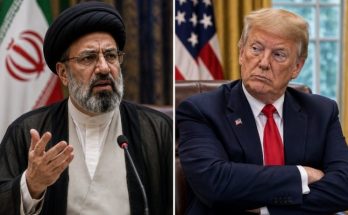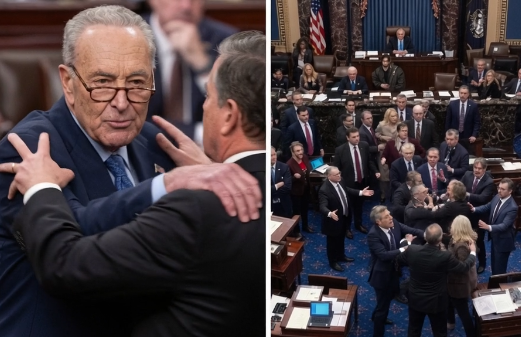
The Senate on Tuesday narrowly blocked a Democratic-led resolution that would have required congressional approval before President Donald Trump could pursue certain military operations against Iran, delivering a key victory to the White House in the ongoing debate over executive war powers.
The measure failed by a 48-47 vote, falling short of the support needed to advance. The largely party-line outcome highlighted deep divisions in Congress over the balance of authority between the legislative and executive branches in matters of war and foreign policy.
Sen. Raphael Warnock, D-Ga., introduced the resolution, arguing that Congress must fulfill its constitutional responsibilities rather than defer to the president on potential military conflicts. “We cannot sit back while the president makes unilateral decisions about war and peace,” Warnock said.
Four Republican senators — Susan Collins of Maine, Bill Cassidy of Louisiana, Lisa Murkowski of Alaska, and Rand Paul of Kentucky — broke with their party to support the measure. All have previously backed stronger congressional oversight of military actions. However, Sen. John Fetterman, D-Pa., crossed party lines to vote against it, providing the decisive margin. Fetterman has increasingly diverged from Democratic leadership on foreign policy and national security matters.
The vote came days after President Trump announced what he called a completed agreement with Iran intended to ease months of tensions and military conflict. In a post on Truth Social, Trump wrote: “The Deal with the Islamic Republic of Iran is now complete. Congratulations to all!” Administration officials have not yet released detailed terms of the agreement, prompting bipartisan questions from lawmakers.
Senate Majority Leader John Thune, R-S.D., said Congress is seeking more information on the arrangement and its implementation. Concerns have also been raised about whether the deal could implicate provisions of the Iran Nuclear Agreement Review Act, which mandates congressional review of certain Iran-related agreements.
White House officials maintained that the resolution was unnecessary, arguing that key portions of the War Powers Resolution are unconstitutional and that an April ceasefire had altered relevant timelines for congressional authorization.
Senate Minority Leader Chuck Schumer, D-N.Y., indicated Democrats would continue pursuing legislative options, including a separate proposal from Sen. Tim Kaine, D-Va., as they work to build broader Republican support. The House has already passed its own measure limiting unauthorized military operations involving Iran, but the Senate has yet to take it up.
The closely divided vote underscores a long-standing constitutional tension. While Congress holds the power to declare war, presidents of both parties have historically asserted broad authority as commander in chief. For now, President Trump’s military flexibility regarding Iran remains intact, with no new congressional restrictions imposed by this legislation.
Several questions persist, including the specifics of the U.S.-Iran agreement and whether additional efforts to check executive authority will gain traction.